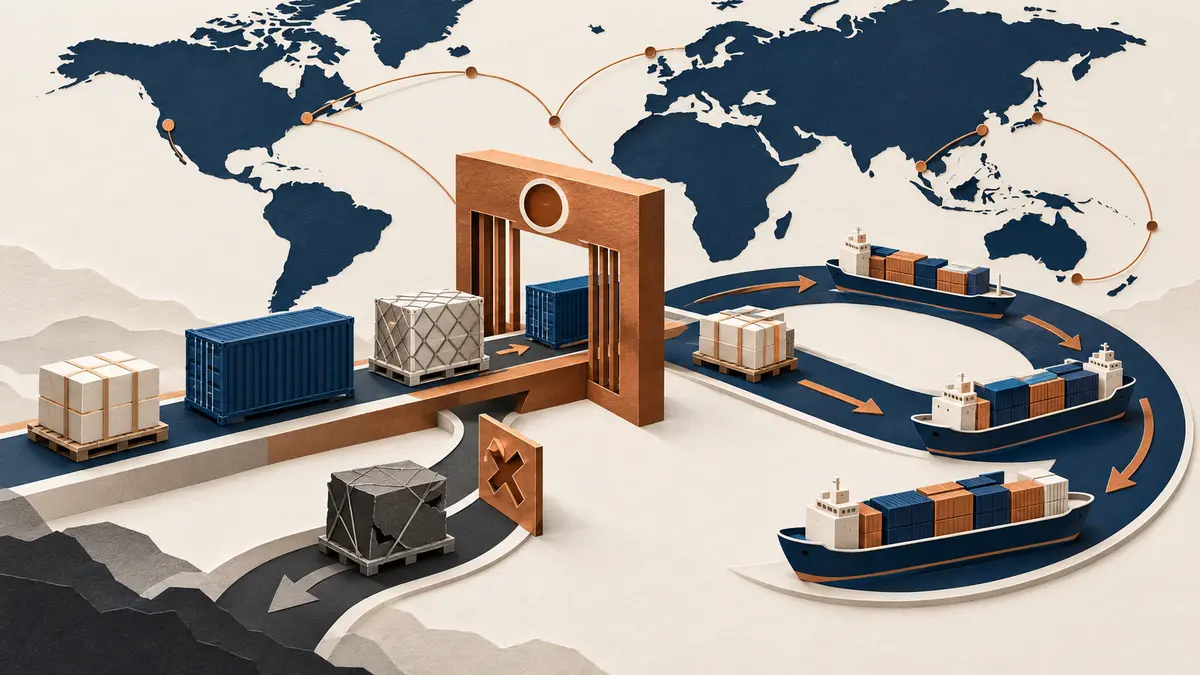
More quote requests can make a freight forwarder less profitable
A full sales pipeline can hide a poor commercial system. Pricing teams quote unfamiliar lanes. Operations accept cargo that needs constant exception handling. Finance carries duties, disbursements or slow-paying customers. The company reports more revenue while the work that remains after carrier cost and operating effort becomes less attractive.
The problem is not that marketing produced demand. It is that the business treated every importer or exporter as the same buyer. A predictable container movement on a controlled trade lane is not commercially equivalent to irregular hazardous cargo, urgent air freight, an incomplete customs brief or a shipper who expects long credit terms.
My verdict: market the operating thesis the forwarder can defend, then qualify the account before pricing becomes expensive. The goal is not the largest enquiry total. It is a portfolio of shipper accounts whose cargo, route, service expectations, cash profile and repeat pattern fit the business.
This intent differs from the industrial distributor growth guide and the broader lead-stability framework. Freight forwarders coordinate international movement, documents, providers and risk. They need an industry-specific account gate before applying generic acquisition advice.
The Shipper Account Fit & Route-Control Gate
Use these six checks before a quote request becomes qualified pipeline. The framework is a commercial prioritisation tool, not customs, sanctions, insurance, dangerous-goods, legal or financial advice.
Is the shipper's need specific?
Name cargo, origin, destination, mode, frequency, service failure and desired outcome.
Does the lane fit?
Check buying strength, carrier and agent relationships, cut-offs, capacity and local coverage.
Can it be handled safely?
Clarify classification, documentation, packing, customs, restrictions and special handling.
Can operations keep the promise?
Test pricing speed, handoffs, tracking, exceptions, claims, escalation and owner capacity.
Does the account create value?
Estimate realised gross profit, service workload, credit exposure and collection timing.
Should this enter the portfolio?
Look for predictable shipments, expansion potential, retention and strategic route value.
FIATA describes freight forwarding as designing logistics service chains across transport modes by balancing cost, speed and reliability, while also requiring regulatory and customs knowledge. That is why “we move freight worldwide” is too broad to guide acquisition. The forwarder needs to name where its route knowledge, provider relationships and operating control create a better commercial fit.
UK government guidance similarly notes that forwarders may arrange customs clearance, maintain documents, oversee packing and deal with dangerous goods. Those responsibilities vary by service, contract and jurisdiction. The marketing implication is narrow but important: a campaign must not attract or promise work that the operating and compliance system has not approved.
The Search-to-Repeat-Shipment Evidence Loop
The gate protects a single account decision. This loop prevents marketing, pricing and operations from learning three different versions of customer value.
Name the route thesis
Choose shipper, cargo, lane, mode, frequency, problem and exclusions.
Reach active demand
Use search, referrals, partners, outbound and trade visibility according to buying behaviour.
Complete the shipment brief
Confirm fit, documents, decision process, timing, volume, credit and service expectations.
Price controlled work
Record validity, assumptions, inclusions, exclusions, responsibilities and next action.
Observe realised value
Track execution, exceptions, carrier cost, workload, claims, gross profit and collection.
Return account evidence
Feed retention, lane expansion and repeat value back into targeting and proof.
Google Ads can capture a shipper searching for a defined lane, mode or freight problem. LinkedIn Ads can support visibility among logistics, procurement and supply-chain stakeholders where account selection matters. Neither channel fixes slow quoting, generic service pages, unclear routing ownership or an operation that cannot accept the work.
The destination should translate operational fit into buyer evidence. A focused landing page can explain the relevant lane, cargo parameters, modes, service scope, response process, proof and limitations. Do not publish invented transit times, unsupported network coverage or badges the company cannot substantiate.
Build evidence for the shipper's actual decision
A buyer does not need another page claiming “end-to-end solutions.” They need enough evidence to decide whether this forwarder can handle this shipment pattern responsibly.
| Buyer question | Evidence to make visible | Business signal to retain |
|---|---|---|
| Do you understand our movement? | Relevant origin, destination, mode, cargo, frequency and service requirements | Which route and cargo evidence influenced qualification |
| Can you control the handoffs? | Named scope, provider roles, milestones, communication and escalation process | Planned versus actual handoffs and exceptions |
| What does the quote include? | Validity, assumptions, surcharges, exclusions, responsibilities and required information | Quote completeness, revision count and reason won or lost |
| Can we trust the operating promise? | Relevant qualifications, process evidence, limitations and comparable experience | Service performance, claims, exception workload and feedback |
| Will the relationship improve? | Review cadence, shipment data, issue ownership and expansion logic | Repeat shipments, lane expansion, realised gross profit and cash collection |
Government risk guidance for freight forwarding highlights bills of carriage, insurance, customs charges, storage, trading conditions and international commercial terms. Those are not marketing settings. They are evidence that account fit and commercial risk extend beyond the first rate offered.
Use conversion tracking and CRM stages to preserve source and progression: enquiry, suitable brief, quote issued, accepted quote, first shipment, collected gross profit and repeat shipment. A form completion should not be the final success signal returned to advertising.
Choose the next action from fit and control
| Situation | Decision | Owner action | Avoid |
|---|---|---|---|
| Clear lane and cargo fit, complete brief, credible volume and controlled service | Pursue | Assign account owner, quote deadline, evidence plan and next shipper decision | Generic quote with hidden assumptions |
| Promising shipper, but documents, frequency, terms or responsibilities are unclear | Qualify | Complete the shipment and commercial brief before pricing | Guessing inputs to meet a response-time target |
| Attractive account, but one lane, mode or specialist capability is missing | Partner | Define provider, control, liability, economics, handoffs and escalation before promising service | Implying control the forwarder does not have |
| Good fit, but current pricing or operations cannot protect service | Sequence | Negotiate timing, pilot one lane or limit volume until capacity is credible | Winning revenue by destabilising existing accounts |
| Unknown cargo, disproportionate compliance or credit risk, or weak route economics | Decline | Record the reason and protect pricing, cash and operating attention | Quoting for pipeline optics |
If the business serves too many unrelated shipper types, use the Segment Growth-Fit Matrix. If revenue concentration is the problem, use the customer-concentration growth guide. Both support this freight-specific gate without replacing it.
Run a 90-day shipper-account growth test
- Choose one repeatable route thesis. Define shipper type, cargo, lane, mode, shipment pattern, buying trigger, service promise and disqualifiers.
- Build a proof map. Match buyer questions to substantiated route experience, process, qualifications, operating controls and limitations.
- Instrument the quote path. Preserve source, fit decision, brief completeness, quote, acceptance, first shipment, realised gross profit and repeat movement.
- Activate one suitable channel. Improve referrals, search visibility, partner outreach or paid acquisition according to how target shippers buy.
- Review sales and operations together. Compare pricing effort, win reason, exceptions, gross profit, credit, collection and repeat signal by account.
- Concentrate, reshape or stop. Scale only when acquisition and delivered account evidence support the same route thesis.
Review public case studies and ThomPerformance's evidence standards before using any performance claim. Read about Thomas Ho, explore growth services or request the diagnostic when the account qualification and measurement system needs outside review.
Freight forwarder growth FAQs
How can a freight forwarder win more shipper accounts?
Choose a narrow combination of shipper type, cargo, trade lane, mode and service problem where the forwarder has credible operating control. Make that fit visible, qualify each account before committing pricing effort, and connect marketing to accepted quotes, realised gross profit, service quality, cash collection and repeat shipments.
What makes a shipper account profitable for a freight forwarder?
A suitable account produces enough realised gross profit to cover sales, pricing, operations, exception handling, credit and compliance work. Shipment frequency, predictability, payment behaviour, route fit, service complexity and repeat potential matter alongside quoted buy-sell spread. Headline revenue alone does not show account value.
Should freight forwarders target every importer and exporter?
No. Target shippers whose cargo, origin-destination lanes, shipment frequency, service expectations, documentation needs and credit profile fit the operation. Broad targeting creates quote volume without proving the forwarder can price, control, finance and repeat the work safely.
Do Google Ads work for freight forwarders?
They can capture demand when a shipper searches for a specific lane, mode, cargo requirement or customs-related service. Ads are less useful when the destination only says ‘global logistics’ or the business cannot respond quickly, qualify the shipment and connect enquiries to accepted quotes and repeat account value.
How should a freight forwarder measure marketing return?
Track each source through suitable enquiry, complete shipment brief, quote, accepted quote, first shipment, realised gross profit, cash collection and repeat shipment. Website leads and quote requests diagnose demand; retained gross profit and reliable service progression are the owner-level outcomes.
Sources and evidence notes
Sources and current search results were checked on 20 October 2026. Keyword prioritisation remains qualitative because no verified search volume was used. The gate, loop and decision matrix are original ThomPerformance analysis. They are not client results, universal benchmarks, or customs, sanctions, insurance, dangerous-goods, legal or financial advice.
- FIATA: About freight forwarding — current industry description covering transport modes, cost-speed-reliability trade-offs and regulatory knowledge; checked 20 October 2026
- UK Government: Freight forwarding — moving goods — service scope, documentation, customs, packing and dangerous-goods context; checked 20 October 2026
- UK Government: Freight forwarding — managing risk — trading conditions, insurance, carriage documents, customs charges and storage; checked 20 October 2026
Win the shipper accounts the operation can serve well
Freight-forwarding growth is not a contest to publish the widest network or quote every movement. Define the routes and cargo the business can control, qualify the account before pricing, protect cash and operating capacity, then return delivered account evidence to acquisition. That creates a smaller, more useful pipeline—and a stronger route to profitable repeat shipments.