
Two search budgets do not automatically create one growth system
Paid search can place an offer in front of active demand quickly. Organic search can help a business become discoverable when customers research a problem, compare options or look for proof. The channels are complementary, but only when the business decides what each one is meant to do.
I have seen the opposite operating model: the advertising team reports conversions, the SEO team reports rankings, and leadership receives two dashboards that never agree on which customers or outcomes matter. Adding the totals creates more traffic, not more clarity.
My verdict is straightforward: combine the learning and the commercial measurement, not the channel mechanics. Google explicitly says advertising does not improve organic rankings. The value comes from using customer evidence across both routes while preserving separate attribution, costs and review windows.
This is distinct from deciding whether paid ads or SEO should come first. That guide helps sequence an initial investment. This article explains the operating model once both routes have a valid role.
The search case that reinforced the shared-evidence principle
In a July 2022–October 2023 engagement for an anonymised furniture and décor corporation operating in the USA and Europe, my documented scope included technical SEO, on-page improvement, keyword research, content planning, off-page work and recurring reporting. The aim was to build organic demand around a wider paid-acquisition model, not to suggest paid media could buy rankings.
The approved portfolio record shows 528 keywords in positions one to five, 1.83 million monthly clicks, 36.4 million monthly impressions, 753 backlinks and a 94/100 PageSpeed score in the captured reporting period. These are reproduced historical case metrics, not an independent causal study or a forecast for another company.
The lesson I carried forward was not the size of the traffic line. It was the need for one demand map: which customer questions deserved immediate paid coverage, which deserved a durable page, which page experience supported both, and which outcomes could justify continued investment.
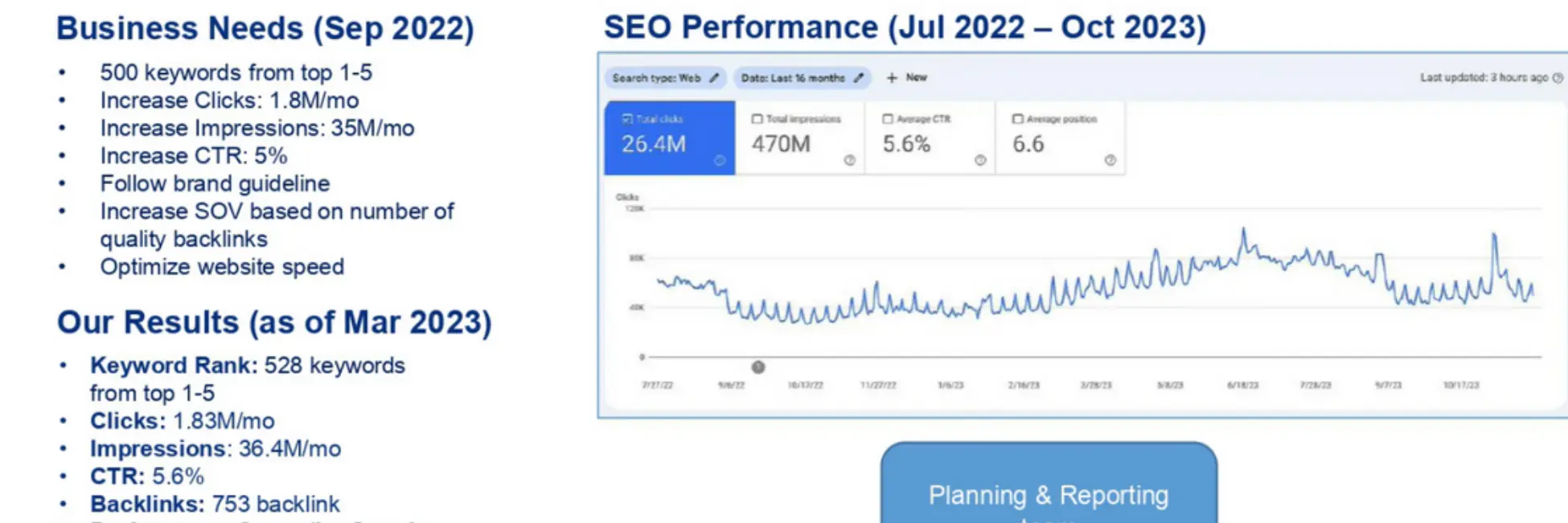
The captured case records search visibility and site-performance outcomes. It does not prove that advertising caused organic rankings.
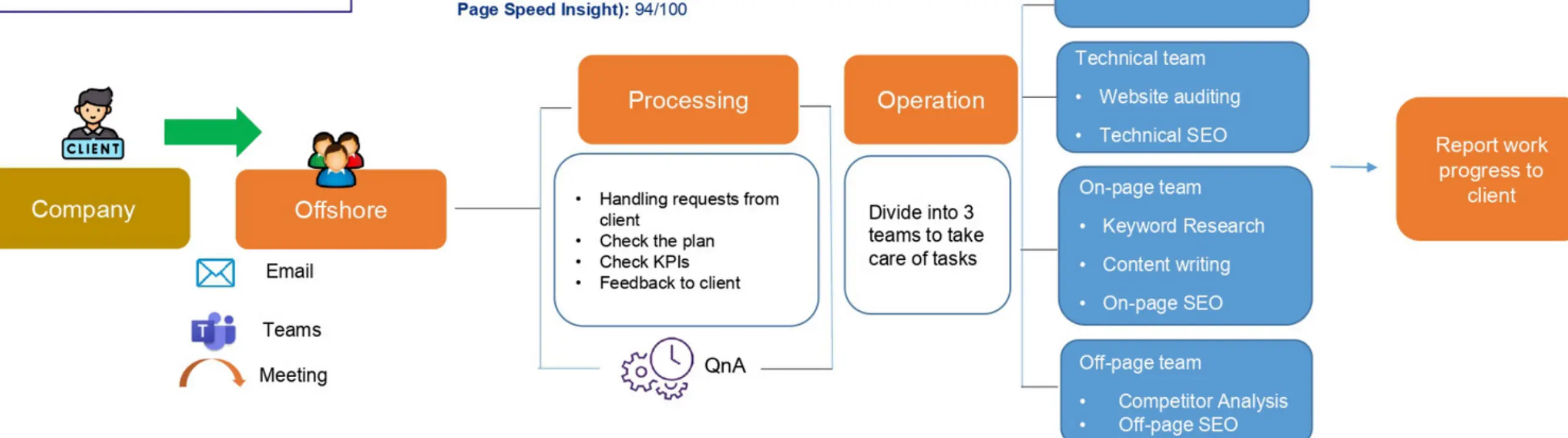
The operating-model evidence separates the work performed from wider brand, product, paid-media and market effects.
The Paid-to-Owned Search Bridge
I use five decisions to connect the channels without pretending they are interchangeable. Each stage produces evidence the next team can use.
Name the customer decision
Start with the problem, offer, market and business outcome—not a disconnected keyword list.
Test urgent demand
Use controlled ads to learn which searches, messages and destinations create qualified action.
Resolve the decision
Build pages that answer the question, show credible proof and help the right visitor progress.
Earn durable access
Make valuable pages crawlable, understandable and useful across relevant searches over time.
Fund the right route
Continue, narrow or shift investment using demand coverage, customer quality and commercial value.
Google Ads provides a paid and organic report when Search Console and Google Ads are linked. It can show when the business appears through an ad, an organic listing or both. Its search-terms report can also reveal wording that triggered ads and inspire landing-page or content ideas. Those tools support shared learning; they do not establish incrementality or transfer ad authority to organic search.
The most useful handoff is often a question. A paid campaign may show that a specific commercial concern repeatedly creates qualified conversations. SEO can then determine whether the business has enough expertise and evidence to publish the best durable answer. Organic search can reveal related questions that paid campaigns should cover during a launch or competitive gap.
Choose the route from the business constraint
| Observed situation | Paid-search job | Organic-search job | Owner decision |
|---|---|---|---|
| New offer with uncertain demand | Test a narrow set of commercial searches and messages | Build only the essential proof and decision pages | Validate before expanding the content estate |
| Paid demand converts; acquisition cost keeps rising | Protect high-value, time-sensitive coverage | Develop durable answers for proven customer needs | Reduce dependence gradually, not through an abrupt switch |
| Organic traffic grows; qualified demand does not | Test sharper commercial intent and destination fit | Repair topic focus, proof and conversion paths | Do not celebrate traffic that cannot create business value |
| Strong organic visibility; a launch is time-sensitive | Add immediate coverage for the launch window | Support research, comparison and long-term discovery | Use the channels together with separate measurement |
| Neither route produces qualified outcomes | Pause expansion and inspect demand, offer and measurement | Stop publishing more pages into the same mismatch | Repair the commercial foundation first |
No universal budget split belongs in this matrix. A business with an urgent launch, proven economics and little organic visibility makes a different decision from an established brand with a deep content estate and expensive branded demand. Search priority here is qualitative; no unverified search volume or generic return multiplier is claimed.
Give the owner one scorecard without blending unlike numbers
Review five lines: paid cost and qualified outcomes; organic visibility and qualified outcomes; searches where both routes appear; destination conversion by intent; and the commercial value created after the enquiry or purchase. Keep the time period, channel scope and attribution limits beside every number.
Google's SEO Starter Guide describes SEO as helping search engines understand content and helping users decide whether to visit. It also warns that changes may not produce a noticeable effect. That is why a combined scorecard needs staged evidence rather than a promise that organic growth will eventually replace paid acquisition.
Use the Search Investment Proof Chain to set organic review windows, and the paid-advertising evidence clocks for the faster channel. If concentration risk is the wider issue, assess marketing channel dependency before shifting budget.
For the operating context, review the growth partnership services, Google Ads support, organic and AI discovery support, the original search case evidence, the evidence standard and my direct operator background.
Sources and evidence notes
Current search results and sources were checked on 29 August 2026. The Paid-to-Owned Search Bridge, decision matrix and owner scorecard are original practitioner analysis. Historical case metrics are reproduced from approved ThomPerformance portfolio evidence with their period, scope and limitations. Paid advertising is not presented as an organic-ranking factor.
- Google Ads: measuring paid and organic search results
- Google Ads: link Search Console and Google Ads
- Google Ads: search terms report and landing-page ideas
- Google: SEO versus paid search and the absence of a ranking benefit
- Google Search Central: SEO Starter Guide
- ThomPerformance: anonymised furniture and décor search-growth case
Frequently asked questions
Should a business use paid ads and SEO at the same time?
Often, yes—when the business needs near-term demand and can also invest in useful pages that compound over time. The channels need separate goals and one shared commercial view. If measurement, offer or website conversion is weak, repair that foundation before funding two disconnected programmes.
Do Google Ads improve organic search rankings?
No. Buying Google Ads does not directly improve organic ranking. Paid search can produce useful evidence about customer language, demand and landing-page response, but SEO performance still depends on making pages accessible, understandable and genuinely useful to searchers.
Which should come first: paid ads or SEO?
Start paid when demand is urgent, measurable and economically testable. Start SEO when important customer questions are stable and the business can sustain useful content and site improvements. A deliberate sequence is usually stronger than splitting a small budget too thinly.
What should paid and organic search teams share?
Share customer questions, commercial intent, search-term evidence, landing-page learning, conversion definitions and sales outcomes. Do not force the same KPI onto both channels. Paid search is judged through controlled acquisition economics; organic search also needs coverage, qualified discovery and longer-term business contribution.
How do owners know whether the combined approach is working?
Review paid and organic visibility separately, then connect both to qualified enquiries, purchases, pipeline or revenue using consistent definitions. Look for faster learning, better page decisions and lower dependence on one route—not a blended traffic total that hides channel quality.
Share the evidence, preserve the channel truth
Paid search creates speed. Organic search can create durable discovery. The advantage is not a magical ranking effect or one blended traffic number. It is a disciplined bridge from commercial demand to fast learning, useful pages, earned visibility and a clearer portfolio decision.
Which customer question deserves immediate paid coverage—and which deserves a durable answer the business should own?