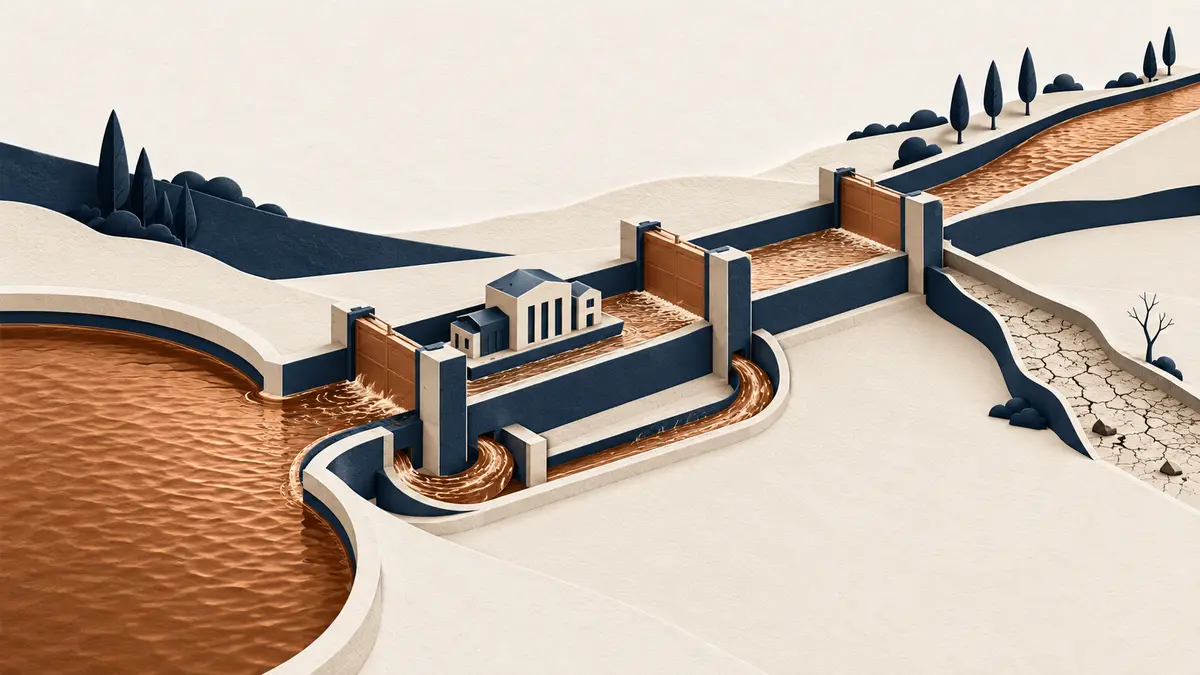
Growth becomes dangerous when commitments arrive before collected value
The order book is rising. The bank balance is falling. Both can be true.
A service business may add people and subcontractors weeks before a customer settles an invoice. A distributor may purchase inventory before a trade account pays. An ecommerce company may fund stock, fulfilment and advertising before the payout clears. A software business may pay acquisition and onboarding costs before subscription contribution repays them.
The owner-level problem is not simply “cash flow management”. It is the sequence between demand, commitment, delivery, collection and reinvestment. Revenue may be booked at one point; cash may move at another. Growth amplifies that timing difference.
My verdict is: do not approve a growth move from revenue demand alone. Approve it when the business can explain the contribution created, the maximum cash gap, the collection evidence, the operational capacity and the downside response. This is not a finance substitute. It is the commercial bridge between marketing, sales, operations and the cash forecast.
Australian Government guidance says a cash-flow statement should show money entering and leaving the business, help determine whether bills can be paid on time and support planning for future costs. It recommends regular updates so seasonal patterns and quiet periods become visible. That is the minimum evidence base for a serious growth decision.
The Cash-Safe Growth Readiness Gate
I use six checks before increasing demand, accepting a materially larger contract, hiring ahead of revenue or adding inventory. A failed gate does not automatically mean “do not grow”. It identifies the constraint that must be repaired, funded or deliberately limited first.
Does each sale create value?
Use realised price less variable acquisition, delivery, fulfilment, payment, support, refund and rework costs.
When does cash move?
Map deposits, invoices, payouts, payroll, inventory, supplier bills, tax, finance costs and customer payment dates.
What gap must be funded?
Find the lowest forecast cash point after the growth commitment while protecting the agreed operating floor.
Are terms evidenced?
Use actual payment behaviour, not contractual optimism. Test deposits, milestones, invoicing speed and overdue exposure.
Can the promise survive?
Check sales attention, people, stock, service quality, systems, management load and the cost of fixing delivery failure.
What happens when timing slips?
Stress slower collection, weaker conversion, higher costs and delayed ramp. Name the hold, cut or funding decision in advance.
The first two checks prevent a common category error. Contribution asks whether the sale is economically worthwhile. Timing asks whether the business can survive the path to collection. A positive contribution does not make cash appear early; a healthy bank balance does not make an unprofitable offer viable.
If revenue is rising while contribution is falling, use the separate revenue-to-profit diagnostic. If the limiting factor is workload, apply the team-capacity growth framework. Cash-safe growth requires both, but it should not collapse every problem into one generic dashboard.
Choose the action from the constraint—not from headline sales
| Observed position | Owner decision | Commercial action |
|---|---|---|
| Healthy contribution, short evidenced cash gap, spare delivery capacity | Release controlled growth | Increase one demand source or cohort, preserve the cash floor and review collected value at the agreed checkpoint. |
| Healthy contribution, long or widening cash gap | Repair timing or fund the gap | Improve deposits, milestones, invoicing, payment terms, stock timing or suitable finance before accelerating volume. |
| Weak contribution, fast collection | Repair economics | Reprice, reduce avoidable cost, change mix or stop scaling the offer. Faster cash does not rescue structurally weak value. |
| Healthy economics, constrained delivery | Sequence demand | Prioritise suitable customers, stage capacity and avoid marketing promises that operations cannot fulfil. |
| Unknown customer value or unreliable measurement | Run a bounded evidence test | Connect source, customer, contribution and collection before treating more leads, orders or booked revenue as growth proof. |
| Downside forecast breaches the protected floor | Hold or redesign | Reduce scope, split the commitment, secure appropriate funding or defer the move. Do not spend the operating reserve twice. |
Business.gov.au recommends testing cash-flow adjustments with financial reports and an adviser. Its current guidance highlights pricing, collecting customer payments faster, controlling costs, planning employee expense, managing inventory and negotiating supplier terms. These are not isolated finance chores. They change the amount and duration of cash required for growth.
Marketing belongs in the same decision. A campaign can look efficient while attracting slow-paying, low-contribution or capacity-heavy customers. Use the marketing-to-revenue evidence guide to connect spend with suitable customers and economic return. Use the advertising-budget decision framework only after cash timing and fulfilment can support the increase.
The Demand-to-Cash Evidence Loop
The readiness gate approves the next move. The loop shows whether the growth engine can fund another cycle without hiding the gap between a marketing signal and collected customer value.
Name the demand source
Preserve the market, page, campaign, referral or outbound origin instead of reporting every enquiry as equal.
Count suitable demand
Connect spend and effort to qualified buyers, accepted opportunities or commercially valid orders.
Record what is promised
Capture price, terms, deposit, expected costs, stock, people and the date each obligation begins.
Protect customer value
Track fulfilment, service quality, rework, refunds, cancellations and the capacity consumed.
Reconcile cash received
Use bank, payment, invoice or payout evidence—not booked revenue or platform-reported value alone.
Release the next stage
Compare realised contribution and cash timing with the forecast, then grow, repair, hold or stop.
This loop is intentionally cross-functional. Marketing owns source and acquisition evidence. Sales owns qualification, terms and expected value. Operations owns delivery and capacity. Finance owns the cash forecast, obligations and collection evidence. The owner decides whether the combined system deserves more commitment.
ThomPerformance's conversion-tracking service can preserve the journey from demand source to a mature commercial outcome. The AI Growth service helps structure customer, market and operating evidence around the decision. Neither replaces accounting, treasury, legal or financing advice.
A 90-day cash-safe growth sequence
Reconcile
Map actual customer payment behaviour, recurring obligations, inventory or delivery commitments, current contribution and the protected operating floor.
Design
Choose one growth move. Forecast base and downside cash timing, assign owners and define the evidence required before the next release.
Run the stage
Limit the cohort, contract, market or budget. Monitor suitable demand, fulfilment quality, invoicing, collection and the lowest cash point.
Reinvest or repair
Compare forecast with collected value. Scale only the proven path; repair terms, economics, capacity or measurement where evidence failed.
Ninety days is an operating sequence, not a promise that every business will complete a cash cycle in that period. Enterprise sales, construction, manufacturing, subscriptions and ecommerce can have very different commitment and collection patterns. Set the review window from the real cycle, then preserve one decision date so temporary optimism does not move the goalposts.
Before committing more capital, review documented case evidence, the evidence standards and Thomas Ho's operator model. If a major customer loss created the cash pressure, start with the stabilisation and replacement framework rather than forcing new demand into an unresolved operating gap.
Sources and evidence notes
Sources and search results were checked on 16 October 2026. Search prioritisation is qualitative; no unverified search volume, universal cash reserve, financing recommendation or proprietary performance result is claimed. The Cash-Safe Growth Readiness Gate, decision matrix, Demand-to-Cash Evidence Loop and 90-day sequence are original ThomPerformance analysis. This article is general commercial guidance, not financial, accounting, tax or legal advice.
Frequently asked questions
Cash-safe business growth FAQs
Why can a profitable business run out of cash while growing?
Profit records economic performance; cash flow records when money actually enters and leaves the business. Growth can require payroll, inventory, delivery or acquisition spending before customers pay. If that timing gap expands faster than available working capital, the bank balance can tighten even while reported revenue and profit increase.
How much cash should a business keep before growing?
There is no universal reserve. Model the timing and downside of the specific growth move, then set a protected operating floor with your finance adviser. Separate cash needed for normal obligations from the amount available to fund acquisition, inventory, hiring, equipment or a longer customer-payment cycle.
Should a business borrow to fund growth?
Funding can bridge a defined timing gap when the underlying economics, repayment source and downside remain credible. It should not disguise structurally weak contribution or an unproven offer. Compare costs, covenants, security, repayment timing and alternatives with a qualified finance professional before committing.
Which marketing metric matters most for cash-safe growth?
No single marketing metric is enough. Connect acquisition cost to a suitable customer, realised contribution, refund or churn risk, payment timing and collected cash. A cheaper lead or higher return on ad spend can still damage liquidity if customers pay slowly or delivery consumes cash first.
When should a business slow growth?
Slow or sequence growth when contribution is weak or unknown, the cash gap is widening, payment assumptions are unreliable, fulfilment quality is slipping, or the downside forecast breaches the protected operating floor. Slowing one channel or cohort is different from abandoning growth; it creates room to repair the limiting constraint.
Make collected value the permission to continue
Growth should create a stronger business, not merely a larger gap between commitments and cash. Reconcile contribution, model the timing, protect the operating floor and release one stage at a time. When collected value and delivery reality match the plan, the next investment becomes a decision rather than a wager.
Which part of your current growth plan consumes cash before it produces trustworthy customer value?